Electrical and Computer Engineering | University of Memphis
FRONT LINESOF THE DIGITAL REVOLUTION
Nowadays, what isn't digital? It's no secret that electrical and computer engineers are needed more than ever. Building and designing computer hardware and software, developing sustainable energy, inventing new ways to communicate information and control machinery are just a few of the things they do. That phone in your pocket? You can thank them for that.
Herff puts you on the front lines of the digital revolution. Design devices and develop sustainable energy. Find ways to identify someone more accurately than their fingerprint. We're even working on ways to capture brain waves and revolutionize the way we teach and learn. It's not science fiction. It's real, and it's happening right now at Herff.
Why Study Electrical and Computer Engineering?
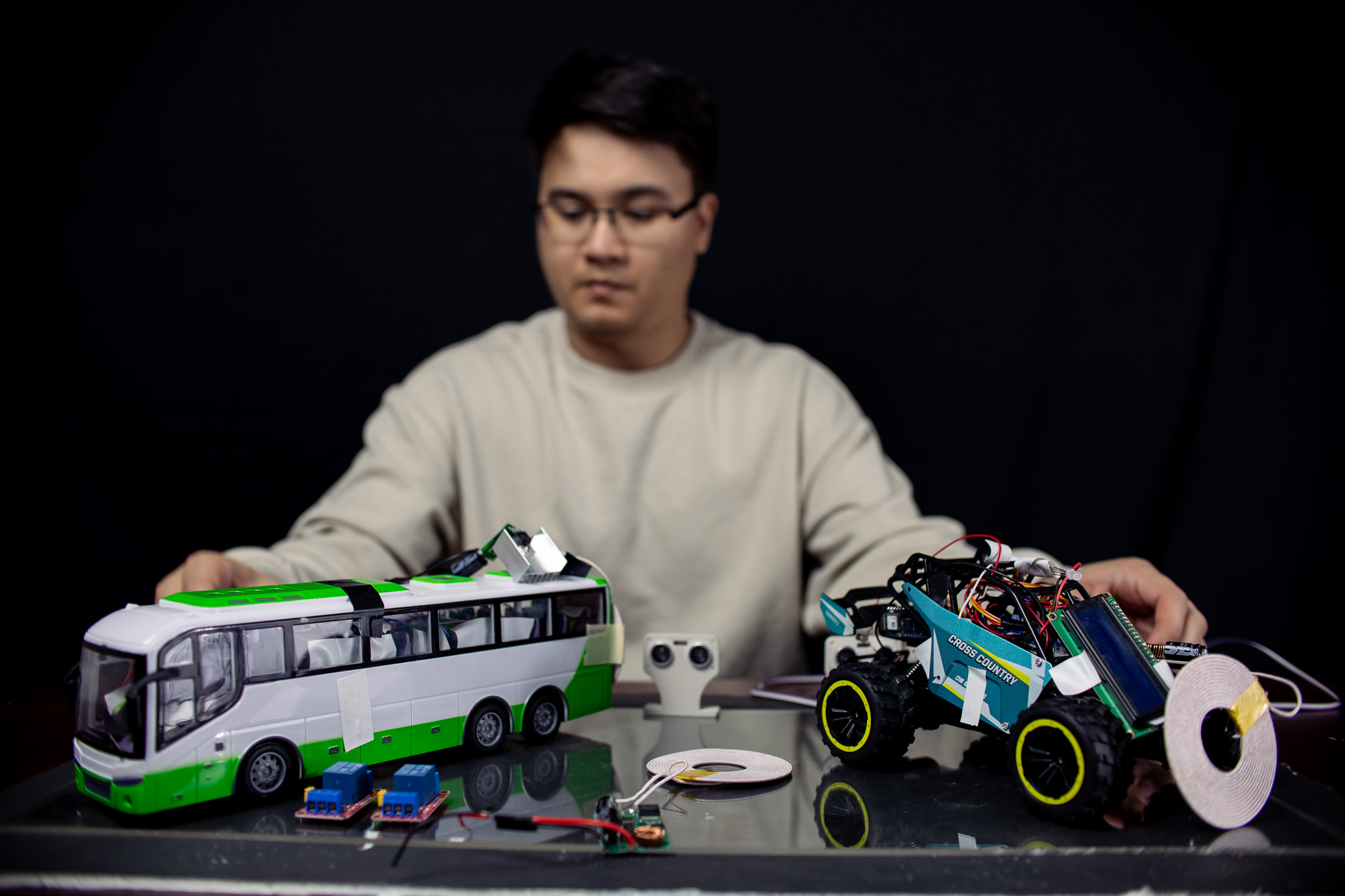
Electrical and Computer Engineering (EECE) is the driving force behind the technologies that shape our daily lives. Bridging the physical and digital worlds, EECE spans artificial intelligence, robotics, renewable energy, cybersecurity, and modern computing. By combining the precision of mathematics and physics with innovative hardware and software design, it stands out as one of the most adaptable engineering fields.
Beyond technical expertise, an EECE education cultivates critical thinking, complex problem-solving, and the ability to turn abstract ideas into real-world solutions. Because this discipline influences virtually every modern industry, graduates enjoy highly rewarding career paths across a remarkably broad range of fields such as biomedical tech, telecommunications, energy, semiconductors, defense, and even business, medicine, or law, where technical fluency offers a distinct advantage. It also provides a robust foundation for research, entrepreneurship, and graduate studies. If you are driven by curiosity and a desire to invent the future, EECE provides an incredible opportunity to make a lasting impact.
Why Study EECE at the University of Memphis?


The Department of Electrical and Computer Engineering (EECE) at the University of Memphis offers exceptional flexibility to help students reach their goals. We provide Bachelor of Science degrees in Electrical Engineering or Computer Engineering, a dual-major option covering both, an Honors track, a Master of Science in Electrical and Computer Engineering, a Ph.D. in Engineering with an EECE concentration, a graduate certificate in Signals and Image Processing, Modern Energy and Power Systems, and Intelligence Engineering and Applications, and an accelerated pathway that lets qualifying students earn both a bachelor's and master's degree in five years. This variety lets students start broad and specialize later or dive straight into undergraduate research.
Our students learn from faculty who are committed to both education and discovery. Through coursework, laboratory experiences, design projects, and research opportunities, students can explore areas ranging from electrical and computer systems to emerging technologies that are shaping the future. Students also benefit from being part of a major research university while receiving the personal attention and support that can make an important difference in their academic and professional development.
Furthermore, our Memphis location—a bustling hub for logistics, healthcare, biomedical technology, and a growing tech sector—delivers direct pathways to local internships and careers. Combined with the Herff College of Engineering's robust scholarships, tutoring, and career services, we provide the ideal mix of academic depth and practical support to build tomorrow's technology leaders.
CHANGINGTHE FUTURE
See EECE programs, scholarships and resources
Memphis is shaping tomorrow.
Memphis is at the center of the AI revolution and the research that's shaping tomorrow is happening at Herff.

Electrical Systems
Research areas include sensors, power systems, smart grid, communication networks and more.
Learn more about Electrical Systems research
Biomedical Systems
Research areas include pressure monitoring, medical image processing, bioinformatics, computational imaging and more.
Learn more about Biomedical Systems research
Intelligent Information Systems
Research areas include computer learning technologies, data visualization, image processing, engineering/semantic web and more.
Learn more about Intelligent Information Systems